
News
Chinese Electric Car Comparison

Oct
Imagine yourself cruising on a picturesque freeway, your electric car humming softly in the background. This is the future of transport – seamless, green, and quiet. China is leading this radical change, innovating and redefining global standards in electric vehicles (EVs).
The charm of eco-friendly, economical, and avant-garde cars is undeniable for many Australians. With electric vehicle purchases making up almost 7.5% of local sales in early 2023, it’s clear. Thanks to governmental incentives and supply chain improvements post-COVID, EV demand is skyrocketing. Soon, a future dominated by electric cars isn’t just possible; it’s inevitable, with profound market impacts.
China, the largest auto market globally, is at this revolution’s heart. EV predictions suggest they’ll represent 58% of China’s new car sales by 2030. The first half of 2023 saw 1.9 million vehicle sales in China, with electric cars making up 22%. This merger of innovation and scale has seen Tesla’s Model 3, SGMW’s Hongguang Mini EV, and BYD’s models topping Chinese EV sales. The BYD Yuan Plus, known as the Atto 3 in Australia, is now China’s best-selling electric SUV.
Key Takeaways
- The Chinese electric vehicle market is at the forefront of global EV trends, with China expected to have 58% of new car sales as EVs by 2030.
- Australia’s EV sales have significantly increased, driven by improving government incentives and a recovering supply chain.
- Leading models in the Chinese EV market include the Tesla Model 3, SGMW’s Hongguang Mini EV, and BYD’s Atto 3.
- Brands like Volvo, Polestar, and BMW are beginning to source models from China due to economic manufacturing advantages and proximity to battery production.
- The demand for cost-effective, feature-rich electric vehicles from China is surging, making a substantial impact on the global automotive market.
We’re about to dive deeper into China’s electric vehicle boom, exploring the ascent of EVs, key Chinese brands, sales figures, major market players, and the trends shaping the transport future.
Introduction to Chinese Electric Vehicles
China is making incredible strides in the electric vehicle (EV) arena, with sales soaring and strong government backing. This momentum is setting China up to be a leader in electric vehicle innovation and adoption worldwide.
The Rise of Electric Cars in China
Electric car sales in China have recently exploded. In just two years, the number surged from 1.3 million to 6.8 million units. This marks a significant advancement in the nation’s EV sector. In 2022 alone, China accounted for over half of global EV sales, selling more than 6 million vehicles. This surge solidifies China’s position as a powerhouse in the electric car industry.
Government Incentives and Support
The Chinese government has played a pivotal role in this growth, pouring more than 200 billion RMB (USD 29 billion) into EV subsidies and tax breaks from 2009 to 2022. This financial aid has made electric vehicles more affordable for consumers, nurturing the rapid expansion of the EV market. Additionally, the development of a widespread public EV charging infrastructure reinforces the government’s commitment to eco-friendly transportation.
The Role of Major Chinese Brands
Key players like BYD, Nio, and SAIC-GM-Wuling (SGMW) are leading the charge, securing significant market presence both domestically and globally. For example, BYD outpaced Tesla in production, rolling out over 3 million new energy vehicles in 2023. This is the second year it has achieved this feat. These pioneering brands are adopting superior technologies, like the cost-effective and safer lithium iron phosphate (LFP) batteries, to enhance their standing on the global stage.
| Brand | Production (2023) | Key Technologies |
|---|---|---|
| BYD | 3 million | LFP Batteries |
| Nio | Not specified | Battery Swapping |
| SGMW | Not specified | Affordable EVs |
China’s Electric Vehicle Market in 2023
In 2023, the China EV market 2023 shows remarkable growth. Record-breaking EV sales trends and soaring Electric car market share affirm China’s leading role in electric vehicles.
Sales Statistics and Trends
Plug-in model registrations in 2023 jumped by 46%, hitting 980,737 units. Electric vehicles now represent 37% of new car sales, with BEVs making up 25% by year’s end.
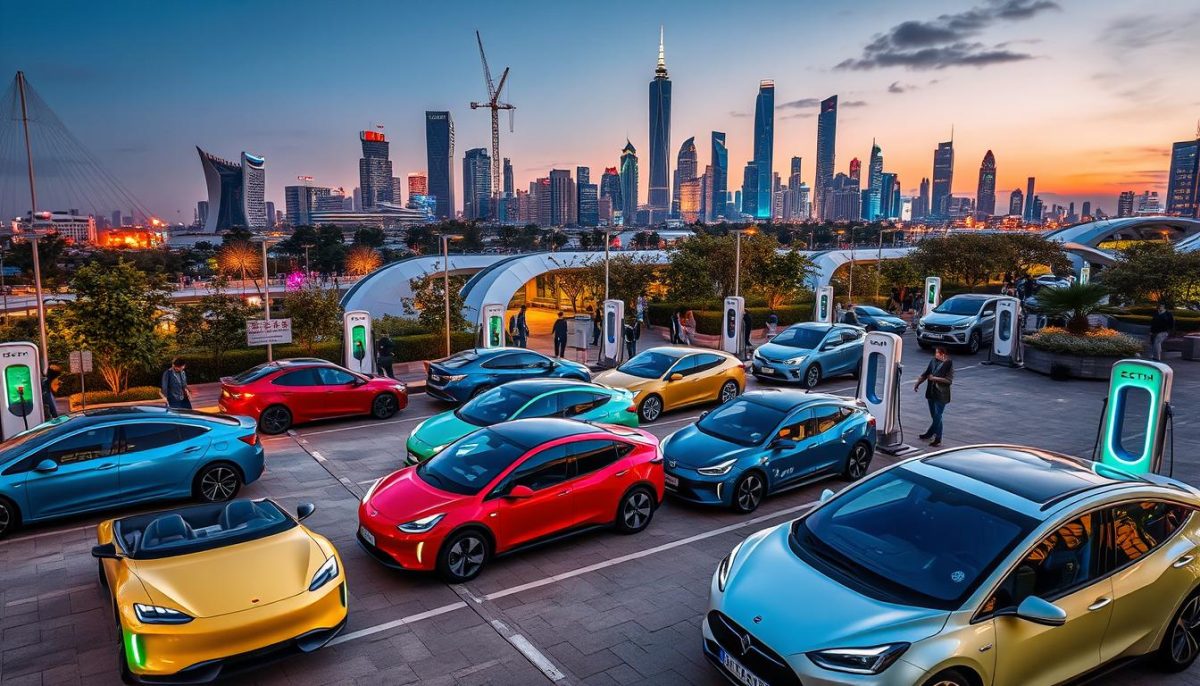
The BYD Song led the charge, finishing the year over 100,000 units ahead of Tesla’s Model Y. Tesla Model Y’s 60,055 registrations in December illustrate China’s increasing embrace of EVs.
Market Share and Key Players
In 2023, BYD claimed the top spot with a 33.8% market share. Tesla secured a 7.5% share, followed by GAC Aion with 6%. SGMW, Li Auto, and Geely also made significant contributions.
| Brand | Market Share (%) | Key Highlights |
|---|---|---|
| BYD | 33.8 | Leading with the BYD Song |
| Tesla | 7.5 | Strong performance with Model Y |
| GAC Aion | 6.0 | Secured top-three spot |
| SGMW | 5.8 | Consistent sales performance |
| Li Auto | 4.7 | High growth with new models |
| Geely | 4.1 | Diversified offerings |
The China EV market 2023 reflects rapid technological progress and growing consumer interest. Quality improvements, extended driving ranges, and new features like autonomous driving are propelling the industry forward.
Key Chinese Electric Car Manufacturers
The Chinese electric vehicle (EV) market is seeing rapid growth, led by key companies. These firms are transforming the automotive scene in China and making notable advances worldwide. In this piece, we look into the performances and influence of top Chinese electric car producers such as BYD, Nio, and XPeng.
BYD: Leading the Market
BYD is at the forefront in the Chinese EV sector. It achieved a significant milestone by delivering 373,083 vehicles in China and internationally last month, marking a 30% increase from the previous year in August. This brand has secured its place in the domestic market and has a strong presence worldwide. With 270,000 vehicles exported in the first seven months of the year, BYD is targeting 500,000 overseas sales by 2024, which will further solidify its global leadership.
Other Major Players: Nio, XPeng
Nio and XPeng are also making substantial progress in the EV market. Nio is known for its unique battery-swapping technology, boasting around 1,300 stations across China. These facilities perform 40,000 battery swaps daily. This not only offers convenience to users but also shows Nio’s dedication to sustainable energy solutions.
XPeng has displayed significant growth too. With a 2.5% year-on-year sales increase, it delivered 14,036 EVs in August. Despite being modest, this growth demonstrates the brand’s resilience and its success in building a loyal customer base. This contributes to XPeng’s growing reputation, both nationally and internationally.
| Manufacturer | Monthly Sales (August 2024) | Year-on-Year Growth | Unique Feature |
|---|---|---|---|
| BYD | 373,083 | 30% | Large international footprint |
| Nio | 48,122 | 37.8% | Battery-swapping stations |
| XPeng | 14,036 | 2.5% | Advanced driver assistance systems |
With the global demand for electric vehicles growing, Chinese EV manufacturers like BYD, Nio, and XPeng are in a strong position to benefit. Their cutting-edge technologies, impressive sales, and increased market visibility make them prominent contenders in the global EV market.
Comparison of Popular Chinese EV Models
Chinese electric vehicle models have swiftly gained popularity both domestically and internationally. This is due to a combination of advanced features, competitive pricing, and impressive performance metrics. Let’s delve into the top models and their distinct characteristics. Additionally, we’ll provide a clear EV price comparison.
Top Models and Their Features
Among the numerous Popular Chinese EVs, several stand out due to their performance and innovative features:
- BYD Han: Rivalling Tesla’s Model S, the BYD Han offers a range of up to 605km and accelerates from 0-100km/h in just 3.9 seconds.
- Nio ET5: Comparable to Tesla’s Model 3, the Nio ET5 boasts up to 1000km of range, with a 360kW/700Nm all-wheel-drive system.
- Wuling Hongguang Mini EV: This city car has become China’s best-selling fully electric vehicle, featuring a top speed of 100km/h and two battery options.
- Hongqi E-HS9: A luxury SUV with a range of 690km, offering seating configurations for four, six, or seven passengers.
- Zeekr 001: Known for its high performance, the Zeekr 001 provides over 1000km of range and features a 400kW/686Nm dual-motor drivetrain.
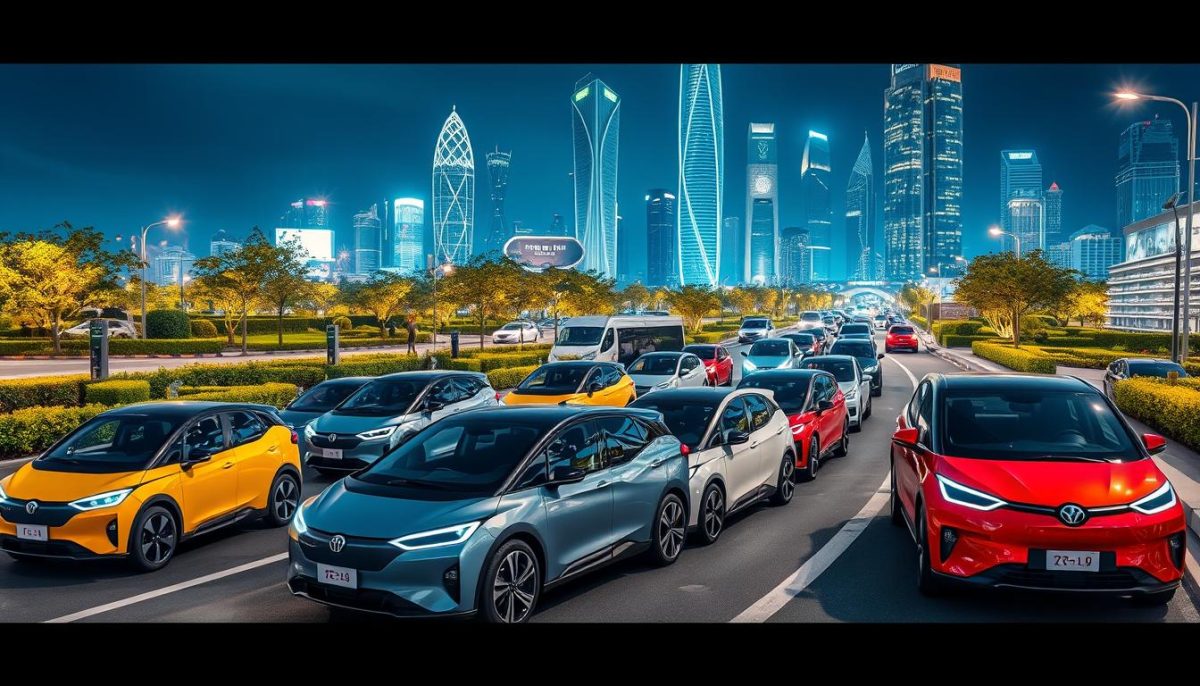
Price and Performance Comparison
Price is a critical factor when considering EVs. A clear EV price comparison can guide you through the selection process:
| Model | Starting Price (AU$) | Range (km) | Acceleration (0-100km/h) |
|---|---|---|---|
| BYD Han | 45,070 | 605 | 3.9 seconds |
| Nio ET5 | 68,789 | 1000 | 4.3 seconds |
| Wuling Hongguang Mini EV | 6,878 | 170 | Not applicable |
| Hongqi E-HS9 | 106,894 | 690 | Not specified |
| Zeekr 001 | 62,364 | 1000 | Not specified |
The Popular Chinese EVs spectrum caters to varied budgets and preferences. From the budget-friendly Wuling Hongguang Mini EV to the luxurious Hongqi E-HS9, each model provides distinct features and performance metrics. It’s crucial to carefully weigh the EV price comparison before making a decision.
BYD Atto 3: Australia’s Favourite
The BYD Atto 3 has quickly become a top electric SUV in Australia, praised for its price, performance, and features balance. Known as the BYD Yuan Plus in China, it has earned widespread acclaim in Australia. Its strong presence in the electric vehicle market has played a key role in its popularity.
Key Features and Specifications
The 2023 BYD Atto 3 model offers a compelling feature set for Australian buyers. It has an impressive 5 out of 5-star ANCAP safety rating for 2022 and a Drive Expert Rating of 7.1/10. Priced at $51,011, it combines value with modern design.
Furthermore, the Atto 3 stands out with its driving range that spans 320-420km depending on the model. It supports fast DC charging at 80kW, enabling a charge from 20-80% in just 45 minutes. In comparison, the MG ZS EV also offers a substantial range but can charge faster. Nonetheless, the Atto 3 surpasses with its bi-directional charging capabilities.
Why It’s Popular in Australia
The BYD Atto 3 has won over Australian consumers with a mix of cutting-edge features, economic pricing, and solid performance. As of September 2024, BYD stands as Australia’s second-largest electric vehicle maker, just behind Tesla. It received the 2023 Drive Car of the Year for Best EV under $70,000, showing its market strength.
BYD has seen a 37.53% jump in sales year-over-year. The Atto 3’s proven reliability and competitive features have made it a hit. This acclaim has further cemented its place in the Australian market.
Made-in-China Tesla Models
The Tesla Model 3 and Model Y, produced in China, have proven their worth in the market. Their impressive sales numbers and exceptional performance showcase China’s manufacturing prowess. Tesla’s dedication to quality is evident in these models.

Model 3 and Model Y
In early 2021, the Tesla Model 3 started using batteries sourced from Shanghai’s Gigafactory. These are lithium-iron phosphate (LFP) batteries, unlike the previously used lithium nickel cobalt aluminium oxide (NCA) batteries. This change enhanced the Model 3’s performance, including a 10% increase in its range, now reaching 508km. It also boasts a higher peak power of 233kW and quicker acceleration, taking only 5.99 seconds to hit 100 km/h. These improvements make it superior to its American-made version.
The Tesla Model Y, assembled in the same Shanghai location, meets the high standards of the Model 3. By 2023, it emerged as Europe’s top EV, showcasing its worldwide appeal. Innovations in battery and charging technology have contributed to its success.
Performance and Price Comparison
Comparing the Tesla Model 3 and Model Y, we see their advantages clearly. The Model 3 excels with its range and power, becoming a top electric car in Australia. Sales of Chinese-made cars in Australia jumped by 57.5% in 2023, demonstrating consumer trust. However, the 2024 JD Power study revealed an increase in problems per 100 vehicles for Chinese EVs and PHEVs, marking a quality control challenge as production grows. Despite these issues, the value and performance of China’s Teslas continue to attract buyers globally.
| Model | Battery Type | Range (km) | Peak Power Output (kW) | 0-100km/h Acceleration (seconds) |
|---|---|---|---|---|
| Tesla Model 3 (China) | LFP | 508 | 233 | 5.99 |
| Tesla Model 3 (USA) | NCA | 381 | 216 | 6.13 |
Up-and-Coming: Nio ET5
The Nio ET5 is set to redefine the landscape of electric cars. It aims to challenge the Australian EV market’s existing giants. With a focus on performance and innovation, it’s a game changer.
Features and Performance
The Nio ET5 stands out with its tech advancements. It has a 100 kWh battery, offering an impressive 590 km range on one charge. Dual electric motors produce 489 horsepower, enabling a sprint from 0 to 100 km/h in 4 seconds. Furthermore, safety is enhanced by 33 sensors, including high-resolution LiDAR and high-definition cameras.
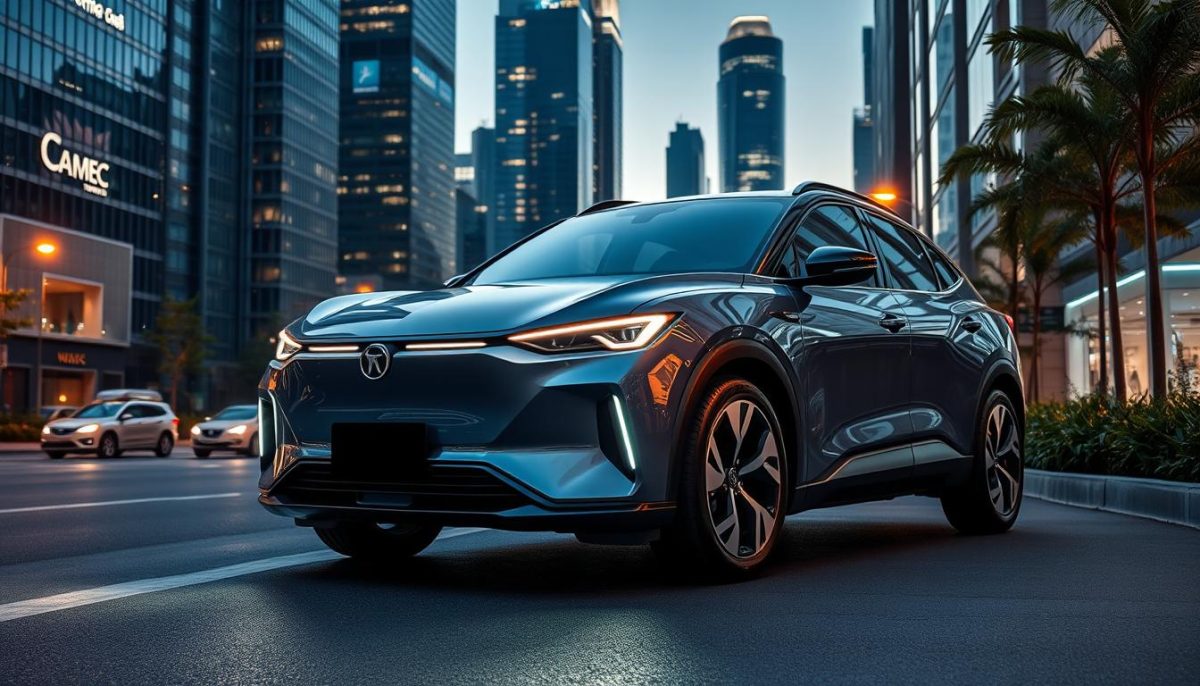
But the ET5 isn’t just about power. It also focuses on driving dynamics and comfort. Its chassis combines steel and aluminum, creating a perfect 50:50 weight balance. The innovative suspension delivers a smooth and engaging ride. Moreover, high-quality Pirelli P-Zero ELECT tires and advanced brakes boost performance and safety.
Market Potential in Australia
Nio aims to enter the Australian EV market soon, possibly by 2025. The Nio ET5, facing rivals like Tesla Model 3 and BMW i4, promises competitive features at an appealing starting price. This positions it strongly among future electric cars in Australia.
Nio’s unique battery swap technology might be a game changer here, easing range concerns. This fast, innovative solution could make owning the ET5 more feasible.
The Nio ET5’s arrival spells an exciting era for Australian EV enthusiasts. With its advanced tech, robust performance, and battery innovation, it’s poised to make a significant impact in the market.
The Budget-Friendly Wuling Hongguang Mini EV
The Wuling Hongguang Mini EV has become a standout in the electric vehicle scene, boasting affordability and a compact size. It’s quickly become popular with urban commuters in China, providing an economical and practical transportation solution. This vehicle challenges the traditional view that electric vehicles are expensive, making them more accessible to a wider audience.
Key Specifications
The Wuling Hongguang Mini EV is designed for city life. It comes with two battery options: a 9.3 kWh for 75 miles (120 km) and a 13.8 kWh for 106 miles (170 km), as per the NEDC standard. Its motor has 27 hp and generates 85 Nm torque, reaching speeds up to 62 mph (100 km/h). Weighing just 700 kg (1,543 lbs), it’s agile and efficient in urban settings.
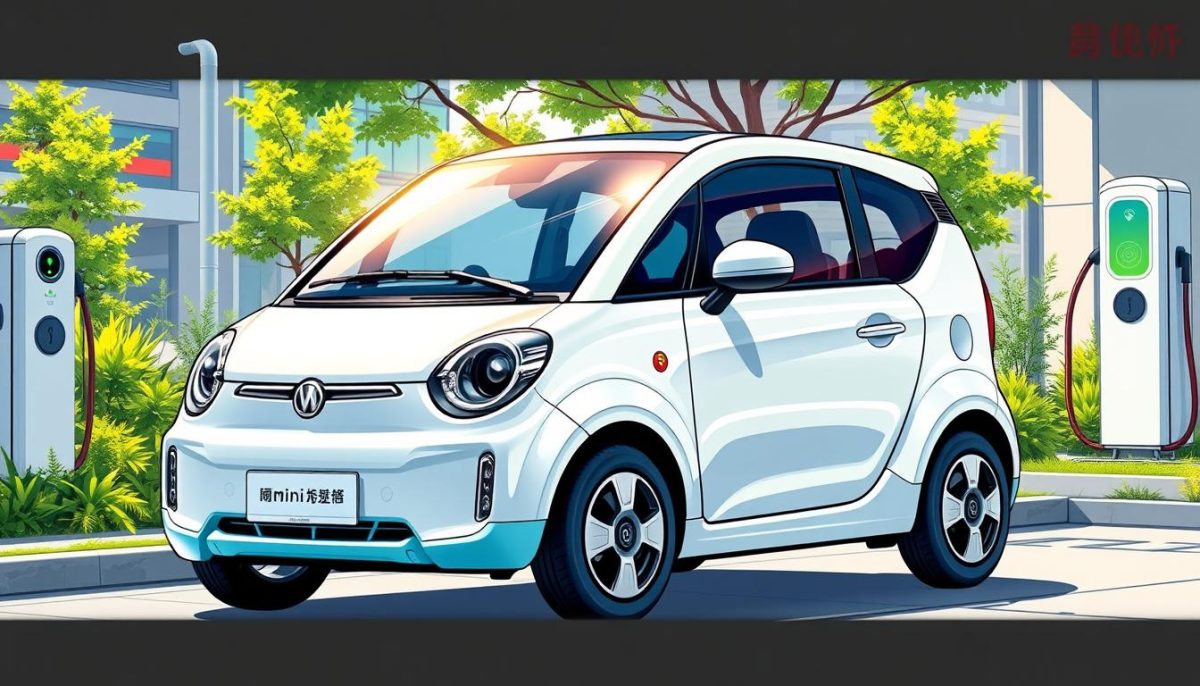
Attractively priced, the Wuling Hongguang Mini EV started at RMB28,800 ($4,389), though the cost has since risen to about $5,000. There’s also a more upscale Macaron model for around $6,645. Despite its affordability, it offers significant cargo space—741 liters with the rear seats down, adding to its appeal.
Popularity in China
The Wuling Hongguang Mini EV highlights the rising demand for affordable electric vehicles in China. It’s the top-selling electric vehicle there since 2020, with over 426,000 units sold. Especially appealing to the younger demographic in bustling urban environments, its success illustrates a shift towards more sustainable urban transport solutions.
SAIC Motor and General Motors play major roles in the Wuling joint venture, holding shares of 50.1% and 44% respectively. Their strategic entry into the market captures a significant share of the growing Chinese electric vehicle sector.
Below is a comparative table showing how the Wuling Hongguang Mini EV stacks up against other popular electric vehicles worldwide:
| Model | Price (AU$) | Power (kW) | Battery (kWh) | Range (km) |
|---|---|---|---|---|
| Wuling Hongguang Mini EV | $7,000 | 15 kW | 9.2 kWh | 120 km |
| GWM Ora (AU) | $43,990 | 126 kW | 48 kWh | 310 km |
| MG ZS EV (NZ) | $45,600 | 130 kW | 50.3 kWh | 320 km |
| Nissan Leaf (US) | $40,580 | 110 kW | 40 kWh | 240 km |
| Smart EQ Fortwo (UK) | $38,750 | 60 kW | 17.6 kWh | 130 km |
| Dacia Spring (EU) | $32,300 | 33 kW | 26.8 kWh | 230 km |
| Nissan Sakura (JP) | $25,800 | 47 kW | 20 kWh | 180 km |
The Wuling Hongguang Mini EV’s triumph speaks volumes about the changing nature of Chinese EV sales. Its low cost and compact size address the practical needs of urban dwellers. This case demonstrates that electric transport can be both effective and economically viable.
The Luxury Option: Hongqi E-HS9
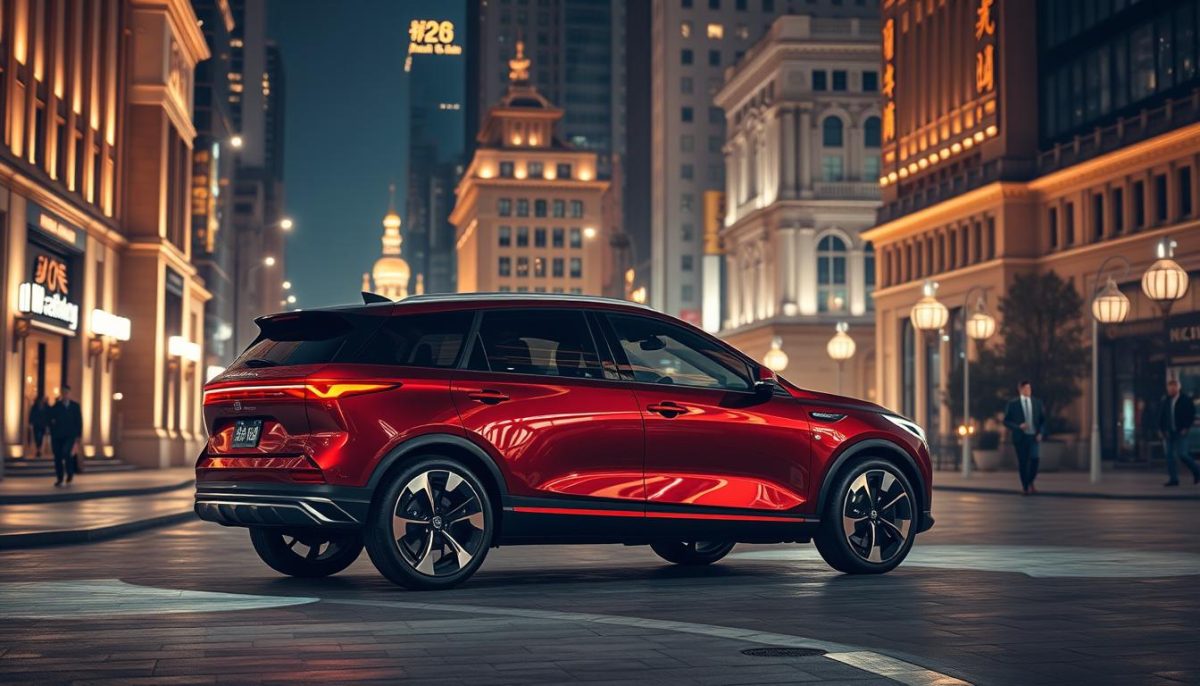
The Hongqi E-HS9 is a Luxury electric SUV known for its plush interiors and advanced tech. As a premium EV brand, it showcases impressive performance worldwide. It began turning heads in the Netherlands since December 2022.
Features and Specifications
The Hongqi E-HS9 boasts a luxurious cabin, panoramic sunroof, and elegant two-tone color scheme. It greets with a ceremonial light, blending tradition with futuristic elegance. The vehicle’s high-capacity batteries ensure long trips and quick acceleration.
Key features include:
- Battery: Lithium-ion battery, 90.0 kWh to 120 kWh variants.
- Range: 265 km to 540 km, weather-dependent.
- Charging: Up to 140 kW DC fast charging.
- Performance: Hits 100 km/h in 4.9 seconds, max 200 km/h.
- Dimensions: 5209 mm long, 2010 mm wide, 2705 kg weight.
- Interior: Four screens: driver, central, passenger, and climate control.
Market Position
The Hongqi E-HS9 stands as a flagship luxury electric SUV on a global scale. Not yet available in Australia, its €79,995 price tag in the Netherlands reflects China’s high-end EV production. With Business, Executive, President, and President Long Range versions, it accommodates five passengers. The model offers diverse driving modes, catering to different terrains and driving desires.
| Model | Battery Capacity (kWh) | Power (kW) | Torque (Nm) | Range (km) |
|---|---|---|---|---|
| Business | 84 | 320 | 600 | 265-540 |
| Executive | 99 | 405 | 750 | 265-540 |
| President Long Range | 120 | 450 | 825 | 515 |
In conclusion, the E-HS9 is a statement of luxury, performance, and next-gen tech. It stands out as a significant competitor in the premium EV brand market. For now, its main focus is on left-hand drive countries.
High-Performance Zeekr 001
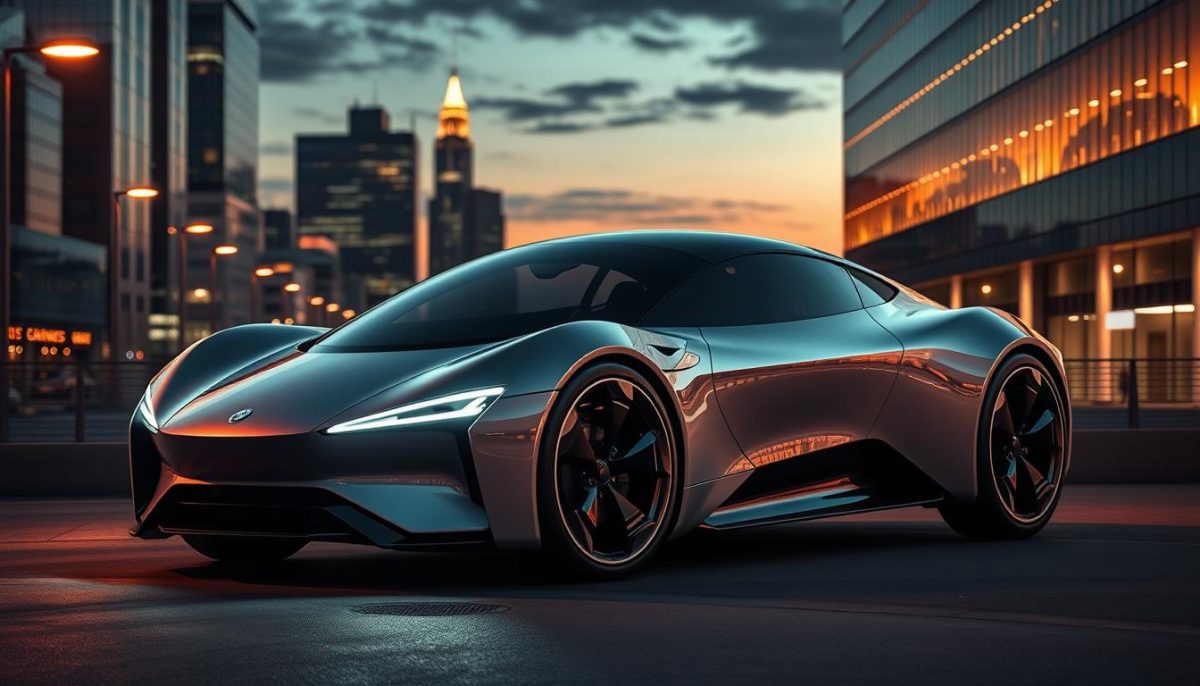
The Zeekr 001 quickly made its mark in the high-performance electric car scene. Launched by Geely in 2021, it revolutionized the EV market with its innovative design and technology. Its dual motors produce a formidable 400 kW. This power enables it to dash from 0-100 km/h in a mere 3.8 seconds, topping out at 200 km/h.
Design and Performance
Catering to various markets, the Zeekr 001 offers three versions, starting at 59,490 Euros. Its sleek aerodynamic design rivals that of the Tesla Model 3, with a drag coefficient of 0.23Cd. The interior is exceptionally roomy, seating three adults comfortably in the back. It also has a generous rear luggage area of 810 liters, extendable to 2,144 liters.
An air-sprung system offers enhanced comfort, featuring five dynamic modes: Dynamic, Comfort, Eco, Snow, and Off-Road. This diversity ensures a superior driving experience across all terrains.
In performance terms, the Zeekr 001 shines with its 200 kW fast-charging capability. This feature can boost the battery from 10 to 80 percent in just 30 minutes. It boasts an energy consumption rate of 18.5kWh/100km. The single-motor version has a WLTP range of 620 km, while the dual-motor version reaches 580 km. Such impressive stats position the Zeekr 001 as a leader in its class.
Potential for Australian Market
Introducing the Zeekr 001 to Australia could significantly influence the local EV scene. Its performance and price point could emulate its European market success, especially in Sweden and the Netherlands. With warranty offers extending up to 10 years for the vehicle and 8 years or 200,000 km for the battery, the Zeekr 001 appeals to Australians interested in performance electric cars.
Its fusion of luxury and efficiency, along with unique features like adaptive headlights and a Yamaha audio system, set the Zeekr 001 apart in Australia’s premium EV market. If it can navigate Australian regulations effectively, the Zeekr could lead the next generation of electric vehicles in Australia.
Government Policies and Their Impact
Government strategies are crucial in the electric vehicle (EV) landscape. They mold consumer choices with electric car incentives, standard protocols, and infrastructure expansion. The Chinese government’s strong backing has notably advanced the EV market. The essentiality of EV government policies for the sector’s achievement is undeniable.
Incentives for EV Adoption
China’s government poured an immense $230.9 billion into the EV arena from 2009 to 2023. From 2009 to 2017, annual investments hit about $6.74 billion, indicating a sharp increase in spending after 2018. Despite a reduction in 2022, buyer rebates and sales tax benefits were crucial incentives until their halt in 2023.
Support also flowed through infrastructure funding, research programs, and official purchasing, empowering firms like CATL and EVE Energy. CATL’s grants jumped to $809.2 million in 2023 from $76.7 million in 2018. Similarly, EVE Energy was granted $208.9 million in 2023.
Regulations and Standards
EV standards establishment was equally critical. These benchmarks guarantee quality, safety, and interoperability, boosting consumer confidence and market steadiness. The Chinese government’s robust guidelines have nurtured a supportive sphere for domestic and international entities.
The shrinkage in subsidy proportion of total EV sales—from over 40% initially to 11.4% in 2023—mirrors the sector’s maturation. This transition showcases rising global competition and a cut in average subsidy per EV from $13,860 in 2018 to less than $4,800 in 2023.
These thorough EV government policies, along with continuous electric car incentives and EV standards, have clearly set China as a leader in the global EV field.
Charging Infrastructure in China and Australia
The growth of the electric vehicle (EV) sector in China and Australia depends on strong EV charging networks. China leads with an extensive public EV charger network. Meanwhile, Australia needs to enhance its infrastructure to keep pace.
Availability of Public Chargers
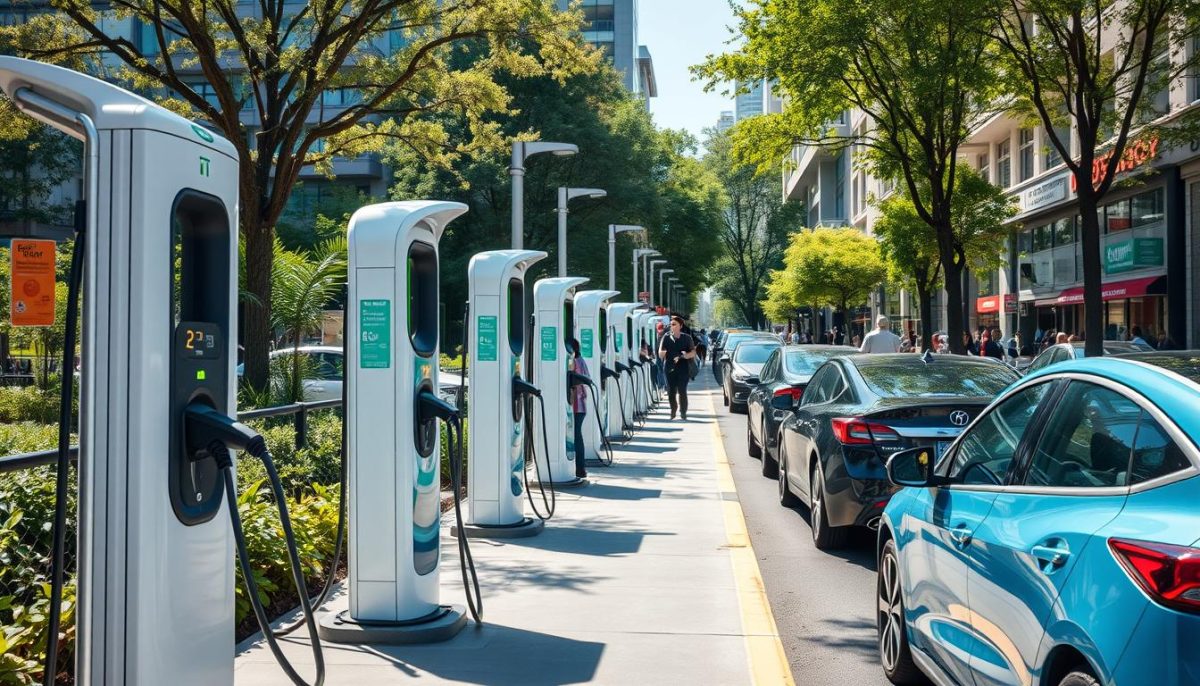
China has prioritized developing its EV charging framework, leading to a broad network. This has made it easier for individuals to switch to electric vehicles. As a result, China is now a frontrunner in EV infrastructure globally. Contrastingly, Australia is encountering hurdles in expanding its EV charging network. It needs over $1.2 billion to set up 5,800 fast-charging stations by 2040. This investment is crucial for Australia to cater to future EV charging needs.
Comparative Analysis
A comparison between China’s and Australia’s EV charging infrastructures unveils distinct variances:
| Category | China | Australia |
|---|---|---|
| Number of Public EV Chargers | 500,000+ | Less than 3,000 |
| Government Investment | Billions annually | $1.2 billion needed by 2040 |
| Market Impact | High adoption rate | Increasing, but slower |
As the EV market expands, both nations face unique challenges. China excels with its extensive network of public EV chargers. For Australia, focusing on substantial investments is essential. This will bolster its EV charging infrastructure for future growth.
Challenges and Opportunities for Chinese EVs in Australia
Chinese-made vehicles are rising in popularity, now the third most popular choice for new car sales in Australia. This is due to electric vehicles, with sales jumping from 4,154 in 2014 to 193,433 recently. The surge is driven largely by Chinese EV challenges and substantial market opportunities.
Last year, 72,342 out of 86,828 electric vehicles sold in Australia were from China. This highlights the strong demand for these cars. Additionally, Tesla’s Shanghai Gigafactory has played a significant role. It is responsible for a quarter of almost 200,000 Chinese-manufactured electric vehicles sold in Australia.
Despite this success, challenges remain. The U.S. has increased tariffs on Chinese electric vehicles to 100%. The EU has also set provisional anti-subsidy duties between 17.4% to 37.6%. These actions aim to restrict exports and promote local investments, representing a competitive challenge. Yet, thanks to the Australia-China Free Trade Agreement, Australia hasn’t added extra tariffs, offering unique market opportunities for Australian EV import.
BYD, a Chinese EV maker, saw its sales in Australia multiply by six. This success is due to increased consumer awareness, competitive costs, technological progress, and beneficial trade agreements. Nonetheless, Chinese manufacturers face challenges with stricter data management and cybersecurity requirements to exploit the Australian market fully.
Japanese vehicles lead the Australian market, with 345,000 cars sold in 2023, outpacing Chinese car sales. However, the competitive prices and advanced technology of Chinese EVs present an excellent opportunity for growth. This is especially true as Australians opt for more sustainable and affordable options. Moreover, China’s control over the majority of the global EV supply chains offers logistical advantages over competitors with longer supply chains.
Despite the ongoing Chinese EV challenges, like cybersecurity standards and global trade tensions, the market opportunities are promising. These are buoyed by the increasing demand in Australia and strategic trade agreements. As consumer preferences shift and infrastructure develops, Chinese EVs are poised for greater success in the Australian automotive scene.
Final Thoughts on Chinese Electric Car Comparison
Our in-depth analysis highlights the rapid progress in China’s electric vehicle sector. The range of models, from budget-friendly city cars to state-of-the-art luxury vehicles, reflects Chinese manufacturers’ innovation. BYD, for instance, has outpaced giants like Tesla in affordability, offering models up to 30% cheaper than equivalent German options.
In Australia, the impact of Chinese electric vehicles is undeniable. Representing over 80% of Down Under’s EV sales, including Tesla, they underscore China’s growing influence. This is evident as the Australian market, with battery EVs accounting for 9.5% of new vehicle sales in March, is increasingly embracing these competitively priced, advanced cars.
The Chinese EV market not only offers diverse and affordable options. It also benefits from substantial government subsidies and ongoing quality enhancements. This makes Chinese EVs an appealing choice for Australians. Yet, we must be mindful of potential challenges like supply disruption and geopolitical tensions. Our findings from this comparison will prove invaluable for consumers and stakeholders as electric mobility’s global momentum surges.
FAQ
What is the current market share of electric vehicles in Australia?
How has government support influenced the rise of electric vehicles in China?
Which Chinese brands are leading the electric vehicle market?
What are some of the most popular Chinese electric vehicle models?
Why is the BYD Atto 3 considered Australia’s favourite Chinese EV?
How do Tesla’s made-in-China models perform in the market?
What makes the Nio ET5 a promising electric vehicle?
What are the key features of the budget-friendly Wuling Hongguang Mini EV?
What sets the Hongqi E-HS9 apart as a luxury electric vehicle?
Is the Zeekr 001 expected to be available in the Australian market?
How do government policies impact electric vehicle adoption?
What is the current state of EV charging infrastructure in China and Australia?
What are the challenges and opportunities for Chinese EVs in the Australian market?
