
-
×
 Website Design
1 × $800.00
Website Design
1 × $800.00
 Website Design
 News
New 600 Mile Samsung Car Battery
05
Sep
Sep
Imagine a future where anxiety over battery life during long road trips is obsolete. Envision setting off across Australia’s vast landscapes, your electric vehicle (EV) fully charged for a journey of up to 600 miles. Thanks to Samsung’s pioneering solid-state battery technology, this scenario is closer than ever. This breakthrough is not just about technical advancements; it represents a significant shift in electric vehicle evolution, setting new benchmarks for both Australian drivers and the global market.
At the SNE Battery Day expo in Seoul, Samsung unveiled their solid-state battery, heralding a new era for electric transportation. This battery boasts an impressive 600-mile range on a single charge, effectively ending range anxiety for EV owners. By exploring the details of this innovative technology, we understand how Samsung is revolutionizing our approach to electric vehicles in Australia.
Key Takeaways
- The new Samsung solid-state battery offers a remarkable 600-mile EV range, setting a new industry standard.
- Mass production is anticipated by 2027, making it an accessible option for super premium EVs.
- Eighty percent charge in just nine minutes dramatically reduces waiting times, significantly enhancing convenience.
- Solid-state technology promises increased safety and longevity compared to traditional lithium-ion batteries.
- Samsung’s development aligns with the global push towards sustainable electric vehicle innovation, particularly in the Australian market.
Introduction to Samsung’s Latest Battery Breakthrough
Samsung introduces a solid-state EV battery, achieving an impressive 600-mile range. This breakthrough is reshaping global EV Standards, pushing the automotive world forward. The impact of such a development is massive, indicating a future where extended electric vehicle usage becomes the norm.
Overview of the 600-Mile Range
Samsung’s solid-state battery doubles many current EVs’ range. Boasting an energy density of 500 Wh/kg, it almost doubles today’s EV battery potency. This marks a significant step towards eliminating the concern of frequent recharges for long-distance travel.
Importance for the EV Industry
This innovation extends beyond just enhancing mileage. It reshapes the EV market, allowing electric vehicles to compete with gas-powered cars in convenience. It reduces range anxiety and introduces the possibility of a nine-minute fast charge. Additionally, these batteries could last up to 20 years, a game-changer for EV adoption.
Samsung has started distributing these advanced batteries for testing. They’re perfecting affordable versions, aiming for mass production by 2027. This initiative is expected to revolutionize the EV industry, encouraging a shift in consumer attitudes and prompting other companies to innovate similarly.
Samsung’s Solid-State Battery Technology
Samsung’s new solid-state battery technology is a major leap in the future of EV battery tech. It offers major improvements over traditional lithium-ion batteries.
What is Solid-State Technology?
Solid-state batteries, unlike their lithium-ion counterparts, use a solid electrolyte. They leverage cutting-edge solid-sulfide science. This leads to better energy storage and safety. This innovation enables higher energy density, boosting electric vehicles’ performance and reliability.
Advantages Over Lithium-Ion Batteries
Solid-state battery technology brings multiple benefits. First, the risk of battery fires drops due to the non-flammable solid electrolyte. Moreover, Samsung’s solid-state batteries can store about twice the energy of lithium-ion batteries, offering longer driving ranges.
They promise up to 600 miles on a single charge, redefining industry benchmarks. Another key benefit is their lifespan, reaching up to 20 years, far outperforming lithium-ion batteries. This makes them a more sustainable and cost-effective option.
The charging speed is also significantly faster. These new batteries can reach 80% charge in just nine minutes. This greatly minimizes wait times for EV owners.
| Feature | Solid-State Battery | Lithium-Ion Battery |
|---|---|---|
| Energy Density | 500 Wh/kg | 270 Wh/kg |
| Range | 600 miles | 320 miles (Tesla Model Y) |
| Charge Time to 80% | 9 minutes | 15 minutes (Tesla’s Supercharger for 160 miles) |
| Lifespan | Up to 20 years | Up to 10 years |
As Samsung progresses in developing and industrializing this cutting-edge EV battery technology, it heralds a future of more efficient, safer, and longer-lasting batteries. This will likely push the EV market toward wider acceptance and boost consumer confidence.
Innovative Charging Capabilities
Samsung’s latest advancement in solid-state battery technology significantly enhances energy density and range. It also introduces a new standard in rapid charging EV technology. This leap places Samsung at the leading edge of the EV charging sphere. It offers a charging velocity that dramatically reduces the time spent at charging stations.
80% Charge in Nine Minutes
Consider being able to charge your electric vehicle to 80% in just nine minutes. Indeed, that’s now possible with Samsung. Their solid-state batteries provide this swift charging feature. This contrasts sharply with the current fastest chargers, like Tesla’s Supercharger, which needs about 30 minutes for a similar charge. Samsung’s innovation turns fast electric car charging into reality, improving the EV usage experience remarkably.
Comparison with Current Charging Times
Current charging technologies pale in comparison. For example, NIO’s 150 kWh battery packs need 9-12 minutes for a 20-80% charge using a 5C or 6C charger. This is quick, but Samsung’s solution is even faster and more efficient. It aims for quick charges without compromising battery longevity.
This advancement elevates EV charger innovation significantly. It offers technology that shortens waiting times and reduces battery wear. Electric vehicles become more suited for long trips, challenging the dominance of traditional, petrol-dependent cars.
Impact on Long-Distance Electric Driving
Samsung’s innovative 600-mile battery is set to change long-distance electric travel. It greatly reduces range anxiety, boosting driver confidence. Now, the challenge of frequently needing to charge on road trips might become obsolete.
Potential to Eliminate Range Anxiety
The newly developed solid-state batteries by Samsung offer a range exceeding 600 miles. This allows drivers to embark on long journeys without fearing battery depletion. Compared to most current models, this is a significant leap. It marks a shift towards more accessible and worry-free electric vehicle travel.
Enhancing Driver Confidence for Road Trips
Driving long distances on a single charge will now boost road trip confidence. This development is underscored by the ability to charge up to 80% capacity in just nine minutes. Merging rapid charging with reduced EV range anxiety makes the concept of road trip charging appealing.
By 2027-2030, expected EV range increases will further encourage longer trips without the frequent need to recharge. Innovations from Samsung, QuantumScape, and Nio are key to this evolution. Their solid-state technology promises to significantly contribute to this shift.
| Feature | Current Technology | Samsung’s Solid-State Battery |
|---|---|---|
| Maximum Range | 300 miles | 600 miles+ |
| Charging Time to 80% | 30-60 minutes | 9 minutes |
| Lifespan | 8-10 years | 20 years |
| Energy Density | 270 Wh/kg | 500 Wh/kg |
These technological leaps represent a major milestone in electric travel. They assure that EV range anxiety reduction will make longer trips more feasible and appealing. Ultimately, this will accelerate the global shift towards electric vehicles.
Collaboration with Major Automakers
Samsung’s entry into solid-state battery technology has captured the attention of major global automakers through automotive partnerships. These collaborations showcase Samsung’s commitment to pushing electric vehicle (EV) technology forward. They also highlight a unified industry effort to uplift consumer experiences and respond to the escalating demands of the EV market.
Hyundai, Stellantis, General Motors
The partnership between Samsung and giants like Hyundai, Stellantis, and General Motors points to a mutual ambition for the evolution of electric vehicles. Hyundai has showcased its dedication to innovation through rigorous testing of Samsung’s batteries, ensuring exceptional performance and safety standards. Stellantis contributes by blending Samsung’s innovations across a diverse range of vehicle types, leveraging its vast brand portfolio. Meanwhile, General Motors enhances this collaboration with its manufacturing and engineering proficiency, maxing out the chances for these electric vehicle collaborations to thrive globally.
Feedback from Manufacturers
Critical acclaim from the manufacturers has been strong, highlighting Samsung’s batteries as potential game-changers for the EV sector. They’ve lauded the batteries for offering longer ranges and faster charging times. These features are pivotal in mitigating range anxiety among EV drivers. Moreover, the anticipation surrounding solid-state batteries is their ability to last up to 20 years, markedly outperforming current lithium-ion options.
Though these batteries are pricier initially, experts believe the long-term advantages and efficiencies offset the initial investment. This feedback from automakers is crucial EV industry feedback for Samsung. It will enable them to enhance their solid-state battery technology, boosting adoption rates and consumer satisfaction in the EV market.
| Automaker | Focus Area | Key Feedback |
|---|---|---|
| Hyundai | Performance & Safety | High standards met through rigorous testing |
| Stellantis | Segment Integration | Potential for wide application across brands |
| General Motors | Engineering & Manufacturing | Strong potential for large-scale success |
Plans for Mass Production and Availability
With Samsung’s latest advancements in EV battery technology, mass production plans are moving fast. Solid-state batteries from the company, with an energy density of 500 Wh/kg and a 600-mile range, will change future EV markets.
Projected Timeline
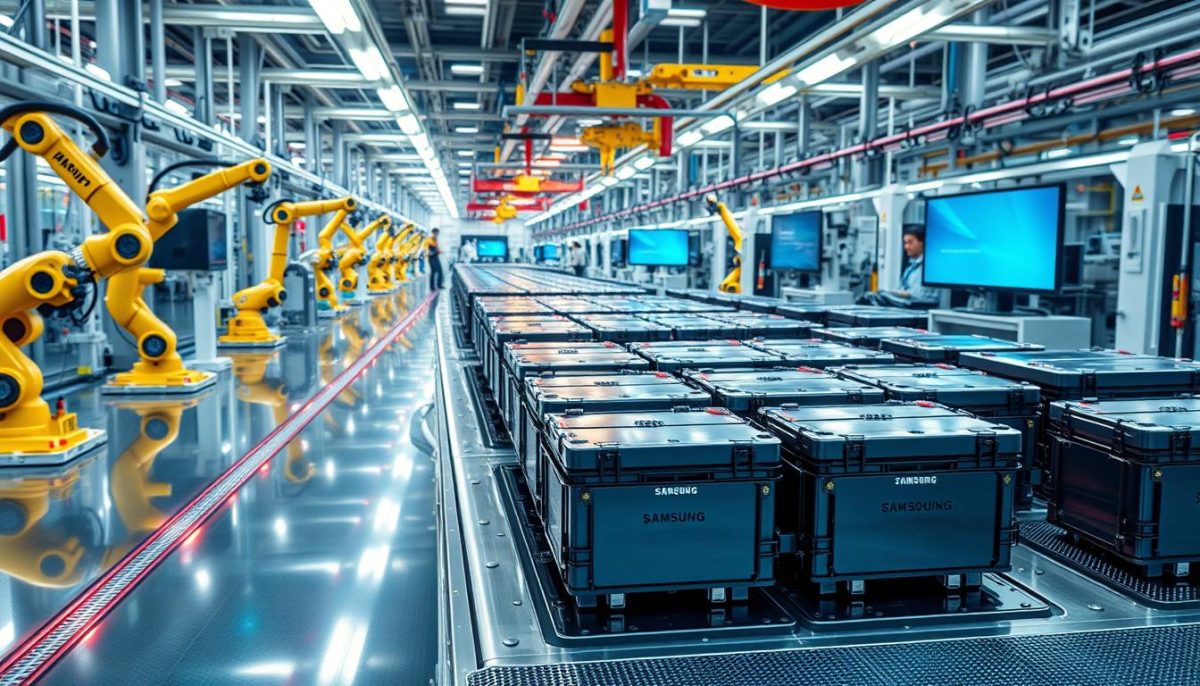
Samsung has set a bold timeline for moving from sample deliveries to mass production. Mass production of its solid-state batteries is anticipated to start by 2027. This schedule is in line with strategic investments, such as the $3.5 billion partnership with General Motors. Together, they plan to establish a 36 GWh EV battery cell plant in Indiana, USA, operational by 2026. This reflects their dedication to boosting battery production capabilities.
Market Segmentation: Super Premium EVs
Due to the high costs of these advanced batteries, Samsung will first target premium electric vehicles. Aiming at this sector, Samsung plans to leverage the exceptional range and quick charging these batteries provide. As production expands, the technology’s advantages will become widely available. This move is expected to influence future EV market trends significantly and create a new standard for premium electric vehicles.
| Year | Milestone |
|---|---|
| 2026 | Start of Operations in Indiana Battery Plant |
| 2027 | Commencement of Mass Production |
| 2030 | Broader Market Penetration for Solid-State Batteries |
Environmental Benefits of Samsung’s Battery
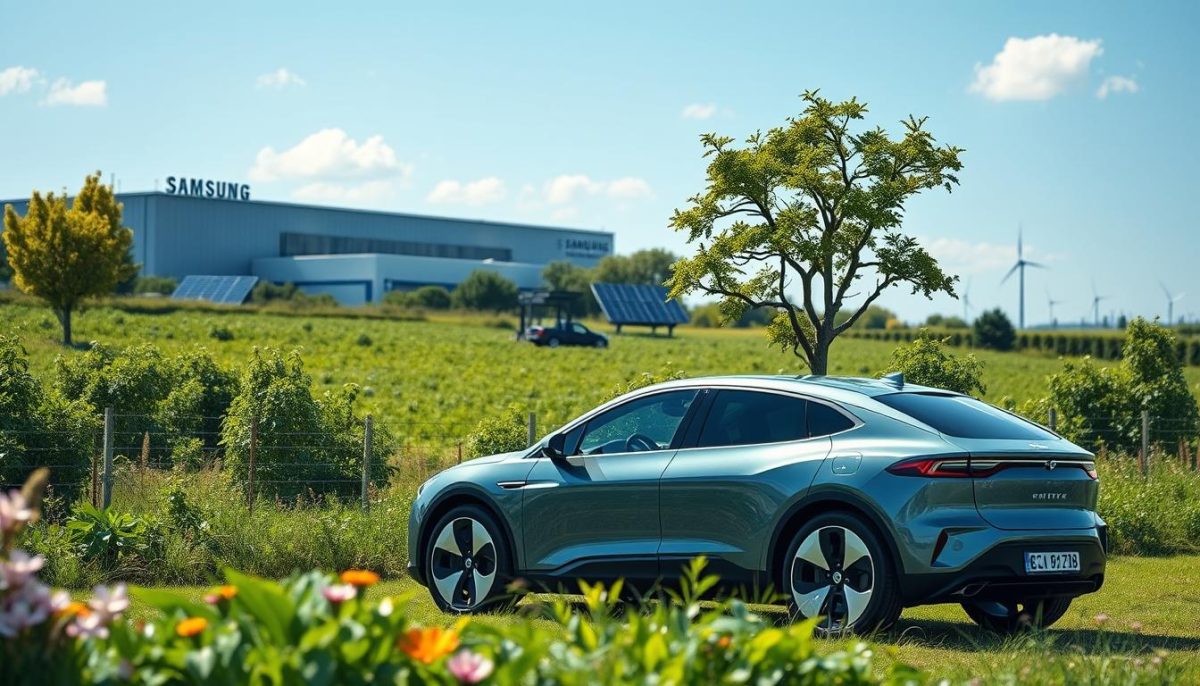
Samsung’s cutting-edge solid-state battery technology is transforming battery performance. It also offers crucial environmental advantages. With a 600-mile range and quicker charging times, these developments aim to reduce the environmental impact of electric vehicles (EVs).
Reducing Carbon Footprint
The ability of Samsung’s new solid-state battery to extend an EV’s range to 600 miles on a single charge is a game-changer. It’s significantly more than the industry’s current max of 270 miles. This increased capacity leads to fewer charging cycles, thus cutting down on greenhouse gases. These improvements encourage the widespread adoption of EVs, which further reduces the carbon footprint.
Savings on Fuel and Maintenance Costs
The economic benefits of Samsung’s battery innovations are equally impressive. EV owners already see up to $1,500 in savings annually on fuel and maintenance. Samsung’s tech pushes these savings even further. The durable solid-state battery, expected to last 20 years, reduces wear and tear. This cuts down on overall maintenance costs. Efficient charging eases the load on charging stations, making EVs more attractive and affordable.
The move to solid-state materials also boosts battery recyclability, diminishing the EV’s environmental impact. When these batteries are paired with renewable energy like solar power, driving becomes almost emission-free. This significantly enhances the impact of reducing greenhouse gases.
| Feature | Current Industry Standard | Samsung Solid-State Battery |
|---|---|---|
| Range | Up to 270 miles | 600 miles |
| Charging Time | 15 minutes to a day | 80% in 9 minutes |
| Battery Lifespan | 10-15 years | 20 years |
| Annual Cost Savings | $1,500 | Higher, due to less wear and longer lifespan |
Energy Density and Vehicle Range
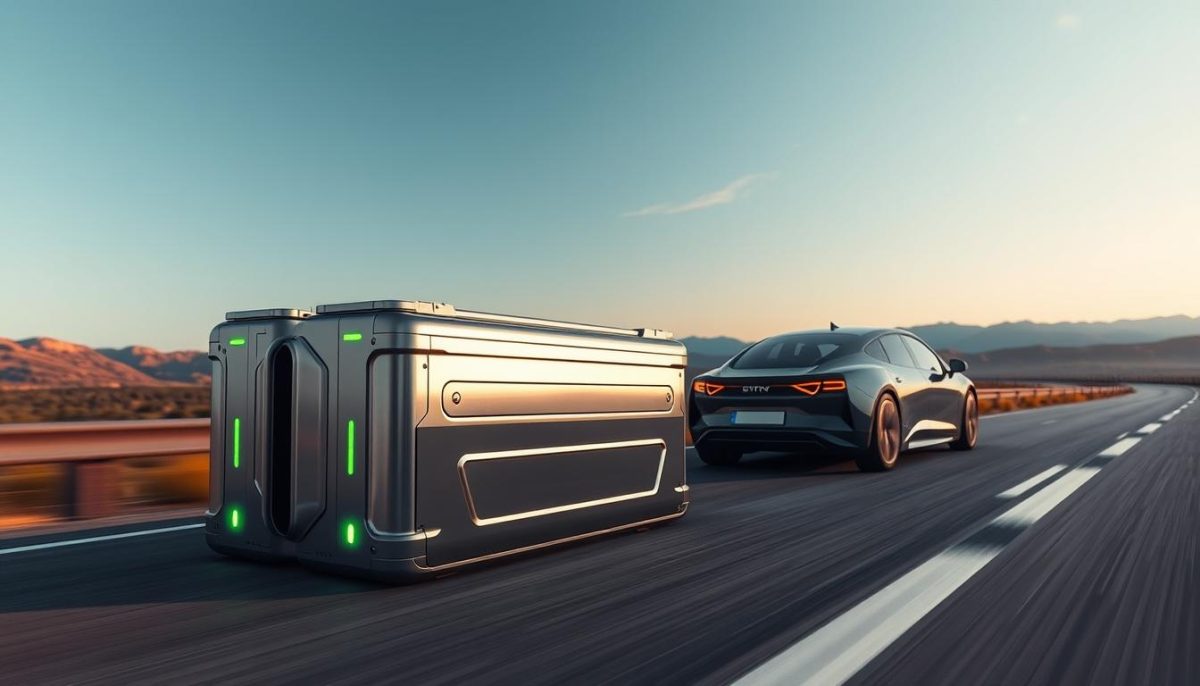
Samsung’s solid-state battery technology presents a significant leap in the EV industry. It brings an increase in energy density to an impressive 500 Wh/kg. This boost in energy density enhances the driving experience by extending the vehicle’s range. It also reduces the need for frequent charging.
500 Wh/kg Energy Density
Samsung SDI’s oxide solid-state battery showcases a high energy density of 500 Wh/kg. This density is twice that of most mainstream EV batteries, which are around 270 Wh/kg. Such an advancement positions these batteries as pivotal for electric vehicles. It enables longer drives without the worry of power depletion.
Comparison with Mainstream EV Batteries
Comparing Samsung’s high energy density batteries to conventional EV batteries shows a clear difference. Standard lithium-ion batteries offer ranges up to 300 miles. In contrast, Samsung’s solid-state batteries promise ranges up to 600 miles. They also boast a lifespan of up to 20 years. This sets new standards for electric mobility’s future.
The Role of Sustainable Product Packaging
The push for greener EV technology highlights the importance of sustainable EV battery packaging. Innovations, such as Samsung’s 600-mile battery, are changing the game. The sustainability of packaging is key in reducing environmental impact and improving marketability.

Ways to Improve Battery Packaging
To push eco-friendly packaging forward in the EV arena, consider these strategies:
- Use Recycled Materials: Employing recycled or biodegradable materials significantly cuts down on environmental harm.
- Design for Reusability: Packaging meant for multiple uses diminishes waste.
- Optimise Packaging Size: Smaller packaging uses fewer materials and cuts transport costs.
Environmental Considerations
When talking about sustainable EV battery packaging, environmental factors are vital. Remember these points:
- Carbon Emissions: Aim for packaging methods that emit less carbon.
- Material Sourcing: Choosing sustainable sources reduces your ecological impact.
- End-of-Life Disposal: Ensure packaging is recyclable or biodegradable to support a circular economy.
Recent data shows a surge in interest towards sustainable living and eco-friendly tech. For example, green technology was a topic in 20% of news articles on Sep 05, 2024. It reveals a growing awareness and concern for sustainability.
Adopting eco-friendly packaging isn’t just good for the planet. It meets consumer demand for sustainability, helping the adoption of greener EV technology.
Consumer Perception and Adoption
Samsung’s unveiling of a 600-mile range solid-state battery may transform consumer views on EVs. This progress in solid-state technology promises extended driving ranges. As a result, the electric vehicle market is seeing increased acceptance and excitement for electric options.
Changing Buyer Perception of EVs
The alteration in consumer attitudes towards EVs is tied to enhanced and dependable range performances. Already, vehicles such as the Rivian R1T, with a 410-mile range, and Lucid’s forthcoming 516-mile range model, are reshaping consumer views. The advent of solid-state batteries, offering a potential 50% to 80% increase in range, could further elevate confidence in EVs for long-distance journeys. Such technological advancements are making EVs a more viable choice for numerous buyers.
Incentives for Adopting Electric Vehicles
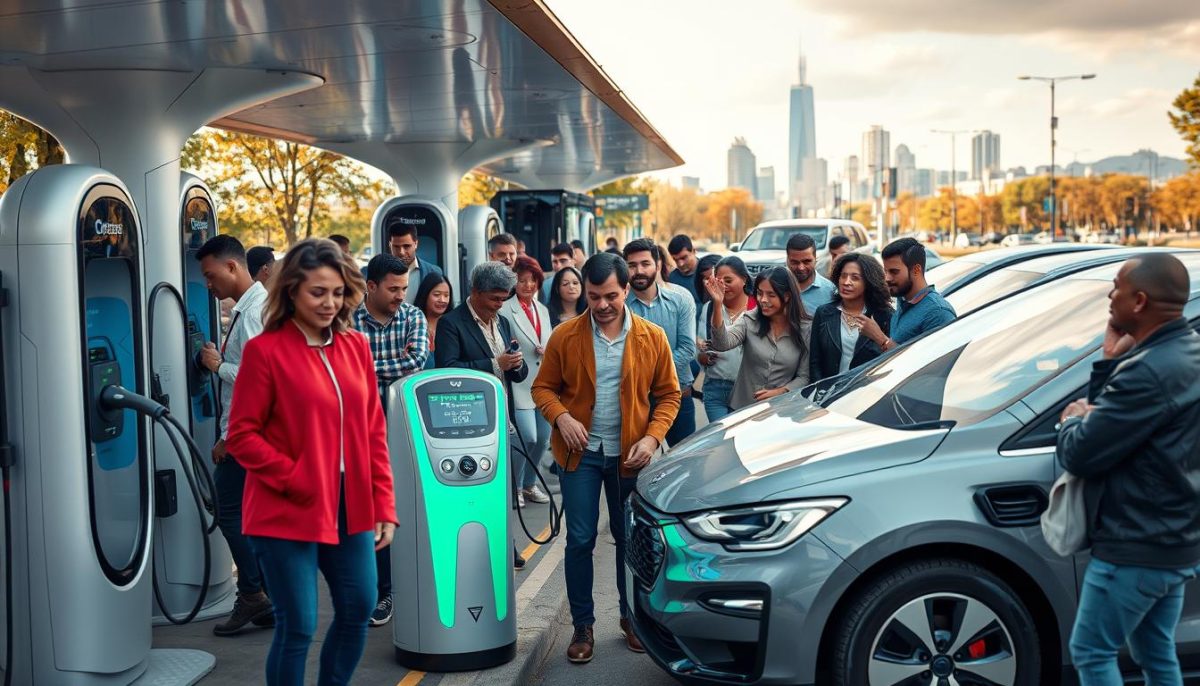
Incentives for EV adoption play a pivotal role in convincing people to choose electric vehicles. In places including Australia, governments are extending tax breaks, grants, and rebates to mitigate the initial costs of EV procurement. Additionally, the ensuing savings on fuel and maintenance render EVs an economically appealing option. These incentives, together with battery technology breakthroughs, are crucial in the widespread adoption and growth of the EV market.
Samsung’s Vision for the Future
Samsung is revolutionizing the electric vehicle (EV) industry with cutting-edge developments. Its ambitious plans for EV battery innovation aim to improve battery performance. Furthermore, these advancements are intended to reach a wider audience. By targeting both high-end and mainstream markets, Samsung is set to elevate electric vehicle accessibility. This initiative marks significant progress in its journey.
Goals for 2026 and 2027
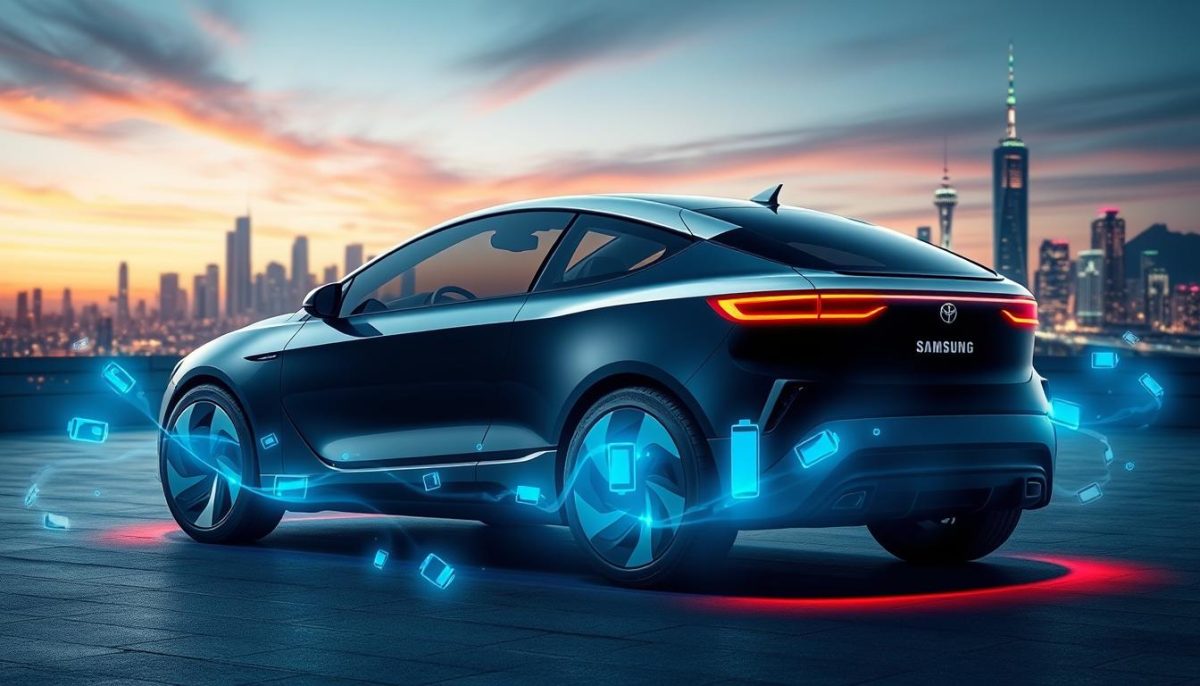
By 2026, Samsung plans to inaugurate a new chapter in EV technology with the mass production of innovative batteries. These batteries will feature rapid charging at affordable prices, charging from 10-80% in just nine minutes. Additionally, their energy density stands at 500 Wh/kg, enabling a 600-mile range on a single charge. By 2027, the focus will shift to overcoming the challenges in scaling solid-state battery production. This effort is expected to herald significant advancements in EV battery tech.
Development of Affordable Battery Options
Samsung’s strategy includes creating cost-effective battery technologies to open up access to premium EV features. Initially focusing on super-premium EVs costing over $50,000, the plan is to extend these high-tech batteries to the mainstream market by 2026. This move is aimed at broadening market inclusivity and reach. Consequently, this will mark notable achievements in Samsung’s pursuit within the EV sector.
Highlighted below are Samsung’s anticipated milestones and goals:
- Mass production of solid-state batteries by 2027.
- Achieve a 600-mile range on a single charge with a fast 9-minute charging capacity.
- Attain nearly double the energy density of typical lithium-ion batteries.
- Design batteries to last up to 20 years before requiring replacement.
- Transition from focusing on super-premium to more affordable EVs by 2026.
| Feature | Details |
|---|---|
| Charge Time | 10-80% in 9 Minutes |
| Range | 600 Miles |
| Energy Density | 500 Wh/kg |
| Lifespan | Up to 20 Years |
| Target Market | Super-Premium EVs initially, Mainstream by 2026 |
Potential Challenges and Hurdles
Despite significant advances by Samsung in EV battery tech, challenges loom large. A main barrier is the high cost of making solid-state batteries. These difficulties could slow the adoption of new technology.
High Production Costs
Solid-state batteries boast benefits like a 600-mile range and quick charging. They also last over 20 years. Yet, producing them costs roughly three times more than traditional lithium-ion batteries. This issue restricts their first use to luxury EVs, with mass production being a distant target.
Availability of Charging Infrastructure
The current electric car charging setup poses another significant obstacle. Although Samsung’s batteries could charge 80% in under 10 minutes, today’s infrastructure can’t handle this speed. The most powerful chargers now provide about 400 kW, insufficient for ultra-fast charging demands.
It’s vital to upgrade and widen the charging network. This will let Samsung’s innovative batteries show their full potential. By 2027, adapting and enlarging the infrastructure is crucial for tackling the EV market’s challenges.
- High Production Costs: Manufacturing costs are triple those of standard lithium-ion batteries.
- Charging Infrastructure: Lack of support for ultra-fast charging stations.
To successfully integrate and adopt next-gen electric vehicles, addressing these EV tech challenges is key. Major industry investments and upgrades to infrastructure will be crucial.
Australia’s Readiness for Advanced EV Batteries
Australia is paving the way for a sustainable future with a sharp focus on its EV market. The electric vehicle (EV) sector is witnessing a promising surge, backed by both consumer interest and governmental support. This discussion aims to delve into Australia’s EV landscape and the role of government actions in advancing it.
Current State of EV Market in Australia
The EV market in Australia is witnessing rapid growth. There’s a significant increase in the variety of models and charging facilities. This expansion is underpinned by infrastructure upgrades tailored for EVs, including fast-charging stations across major highways and cities. Key industry players like Tesla, Hyundai, and Nissan are driving this market forward, offering a range of vehicles for different consumer demands.
Government Policies and Incentives
The Australian government has introduced various government EV incentives to encourage electric vehicle uptake. These incentives encompass financial subsidies, lower registration fees, and tax benefits to make EV ownership more accessible. There’s a strong push to enhance the Australian electric car infrastructure, increasing consumer confidence in transitioning from traditional cars to EVs. These initiatives are not just boosting the EV market but are also in line with Australia’s goal for reducing carbon footprint and embracing cleaner energy solutions.
Advanced Safety Features
Samsung’s latest battery innovation focuses on advanced safety features. Traditional batteries often face thermal runaway, a risk for fires. Solid-state batteries use solid electrolytes to cut down these risks. This makes electric vehicles safer for everyone involved.
Reducing Risk of Battery Fires
Solid-state batteries are changing the game in electric vehicle safety. By using non-flammable materials, they dramatically lower fire risks. This is unlike traditional batteries with their flammable liquids. Samsung’s approach means a safer future for electric vehicle owners.
Enhancing Overall Vehicle Safety
Samsung’s technology does more than reduce fire risks. It includes better thermal management and structural integrity. These factors lead to a longer battery life, up to two decades. Such improvements increase both safety and the vehicle’s reliability.
By enhancing safety, this technology boosts driver confidence. It also encourages more people to switch to electric vehicles. This is key for a future dominated by safer, electric transportation options.
FAQ
What is the significance of Samsung’s 600-mile range solid-state battery?
Samsung’s 600-mile range solid-state battery marks a significant leap in EV technology. It doubles the range of most EVs currently available. Plus, it can charge up to 80% in just nine minutes. This reduces the worry about running out of power and makes driving more convenient.
How does Samsung’s solid-state battery differ from traditional lithium-ion batteries?
Samsung’s solid-state battery uses a solid, not liquid electrolyte. This change boosts energy storage, safety, and gives the battery a life expectancy of about 20 years. It sets a new performance benchmark for the EV sector.
What are the rapid charging capabilities of Samsung’s solid-state battery?
The solid-state battery by Samsung can achieve an 80% charge in a mere nine minutes. This is a considerable upgrade from the current standards for EV charging. It makes electric cars far more practical for both daily commutes and longer travels.
How will Samsung’s solid-state battery impact long-distance electric driving?
With its 600-mile range, Samsung’s solid-state battery could put an end to range anxiety. It reassures drivers for longer trips and could help more people choose EVs. Drivers can cover vast distances without needing to stop often for recharges.
Which automakers are collaborating with Samsung on this battery technology?
Leading car manufacturers such as Hyundai, Stellantis, and General Motors are collaborating with Samsung. They are testing and providing feedback on the new solid-state battery tech. Such partnerships are crucial for driving forward the abilities of EVs and improving user experiences.
When will Samsung’s solid-state batteries be available in the market?
Samsung intends to move from sample deliveries to full scale production in the next few years. Initially, they will focus on super premium class electric vehicles. This plan mirrors the current high production costs and the extraordinary range these batteries can deliver.
What environmental benefits does Samsung’s solid-state battery offer?
The innovation by Samsung in EV batteries helps in reducing emissions of greenhouse gases. It also allows drivers to save on fuel and maintenance costs. These advantages bolster the environmental argument for moving from traditional engines to electric cars.
How does the energy density of Samsung’s solid-state battery compare to mainstream EV batteries?
At 500 Wh/kg, the energy density of Samsung’s solid-state battery notably exceeds that of many current EV batteries. This superior energy density ensures longer driving ranges. It makes Samsung’s battery a top choice in the EV marketplace.
What is Samsung’s approach to sustainable product packaging for its EV batteries?
Samsung is dedicated to environmental sustainability in packaging its EV batteries. Such practices minimize environmental impacts and enhance the appeal in the marketplace. This strategy reflects a broader commitment to eco-friendly product development within the automotive industry.
How could Samsung’s solid-state battery change consumer perception of electric vehicles?
The superior performance and quick charging of Samsung’s solid-state battery could make EVs more appealing for day-to-day use. When paired with benefits like tax incentives and long-term savings, this breakthrough might encourage more consumers to switch to electric cars.
What are Samsung’s goals for the future of EV battery technology?
By 2026, Samsung aims to introduce batteries that charge quickly and can cover high ranges while becoming more cost-effective. These ambitions aim to widen the market and foster a greater acceptance of EVs in various segments.
What challenges does Samsung face in EV battery production and infrastructure?
Significant challenges include high manufacturing costs and the need for better charging infrastructure. Yet, these obstacles also offer chances for investments and advances in the industry.
How ready is Australia’s market for advanced EV batteries like Samsung’s solid-state offering?
The demand for electric cars in Australia is on the rise, bolstered by governmental strategies and incentives. The preparedness of Australia in terms of infrastructure and policies is vital for bringing in sophisticated EV batteries like Samsung’s solid-state option.
What safety features does Samsung’s solid-state battery incorporate?
Samsung’s solid-state battery is equipped with cutting-edge safety technology. It uses solid electrolytes to reduce the danger of fires, a concern with traditional lithium-ion batteries. Enhancing safety is crucial for earning the trust of consumers and advancing the EV industry.
